Japanese basics
From 食べます to 食べる: plain form and dictionary form
Understand how a Japanese verb’s dictionary form relates to plain forms, without assuming that every verb changes in the same way.
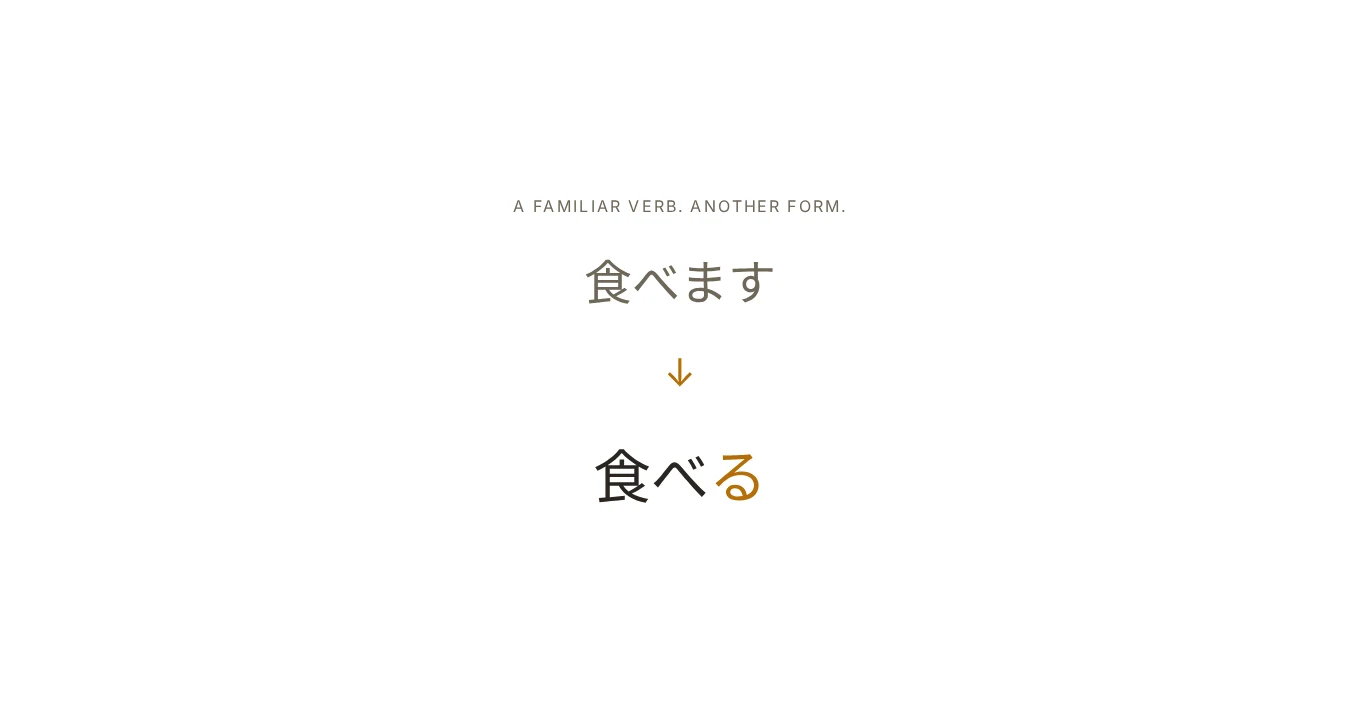
You may learn 食べます (tabemasu) early on, then meet 食べる (taberu) in a dictionary. Both can refer to eating. They are different forms of the same verb.
Dictionary form is one plain form
For a verb, dictionary form is the plain, non-past affirmative form. “Plain form” is a broader term: plain negative and past forms exist too. 食べない (tabenai, “do not eat”) and 食べた (tabeta, “ate”) are also plain forms.
Non-past does not mean “right now” in every sentence. The surrounding sentence and context help you understand whether a verb describes a habit, a future action, or another use.
Notice the verb group
食べます → 食べる is one pattern. 行きます → 行く (ikimasu → iku, “go”) follows another. します → する (shimasu → suru, “do”) is irregular. There is no single ending replacement that works for every verb.
Learn a pair you recognize
When you meet a polite verb, keep its dictionary form beside it. Look for both forms in reading and listening. Recognizing the relationship is a useful step even before you can produce every ending yourself.